

Glazed roofing systems: what do you need to specify?

Simon Edward • 12 June 2026

Does your building project involve a roofed glazing system? Explore essential specifications and considerations.


Does your building project involve a roofed glazing system? Explore essential specifications and considerations.

Glazed roofing systems are a fine example of what glass and metal can achieve in architecture and design.

They're sophisticated structures, typically comprised of aluminium or steel frames and double- or triple-glazed panes. Here at Wrightstyle, our glazed roofing systems are made exclusively from steel and glass. This is so our clients benefit from the inherent strength of steel.


Designed to bring natural light into residential and commercial buildings, they can be found in living spaces, garden rooms, conservatories and atriums. They're a core example of daylighting, helping designers to blend indoor and outdoor spaces.


On top of this, modern examples of glazed roofing systems are thermally efficient and durable, making them a valuable investment in high-end building projects.


If you're including a glazed roofing system in a building project, you'll need to decide what to specify. This guide is intended to help you make the right choice for your specific requirements.


What are the different kinds of roofed glazing systems?

There are many different kinds of roofed glazing systems on the market. The one you choose will depend on design factors and project timelines. If in doubt, your best bet is to talk to a supplier and ask for their expert advice.


  • First, there are roof lanterns and skylights. These are typically positioned on flat-roof house extensions and have a pitched or pyramidal shape.

  • Modular skylights are prefabricated and can be installed individually or in long rows. They tend to be used for commercial buildings.

  • Point-supported glazing uses specialised spider fittings and bolt assemblies to secure glass panels at corners. This achieves a sleek, frameless look.

  • Patent glazing is a traditional roof glazing system that's often found in railway stations, canopies and conservatories. It uses two-edge support with aluminium bars.

  • In structural glass systems, the glass is load-bearing. This requires specialised structural glazing.

  • Finally, there are cable net systems. These use high-strength steel cable nets or trusses to hold large-span glass panes in place.


What do you need to specify when ordering a glazed roofing system?


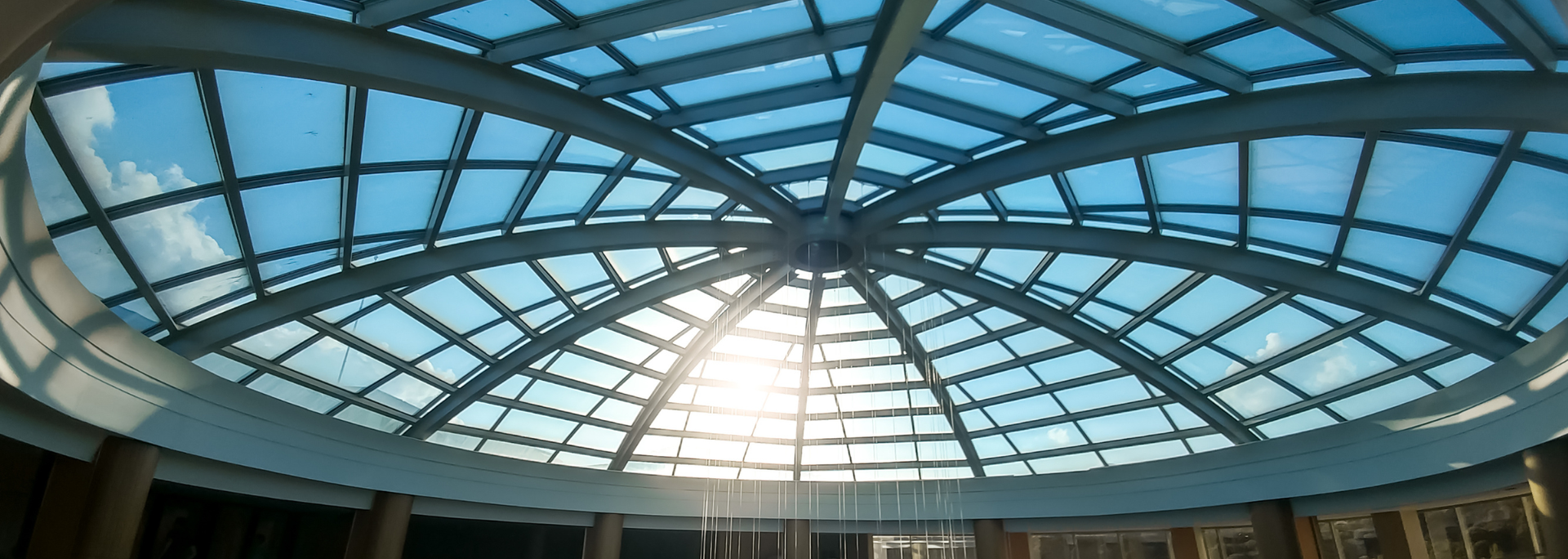
Picture of a glass roof.

When procuring a glazed roofing system, there are seven key things to specify:

  1. The type of glass
  2. The structure and framing
  3. Drainage systems and watertightness
  4. Design
  5. Compliance
  6. Extra protections
  7. Supply options


1. The type of glass

Different types of glass are used in glazed roofing systems. You should specify toughened outer panes for impact resistance and toughened laminated inner panes for overhead safety. These kinds of safety glass are built to break safely and prevent falling glass.

The toughened glass can be heat-soak-tested. This involves checking it for nickel sulfide inclusions, which can cause spontaneous breakage when left unchecked.


The glass should be insulated to meet building regulations. It can be coated with self-cleaning coatings or tintings to reduce glare and improve solar control.

2. The structure and framing

Glazed roofing systems are made from different materials. The most common is aluminium. At Wrightstyle, however, we exclusively make our glazing systems from steel. This is because of steel's inherent strength as well as its suitability for large-span applications and high tolerance levels.

A high-performance glazed roofing system needs to be thermally broken. This involves inserting a low-conductivity insulator between aluminium or steel layers. This stops thermal bridging – the transfer of heat or cold into the building.

The system should be engineered to withstand wind and snow loads. The exact specification will depend on the weather conditions of the place where the system is to be installed.

It needs to be "non-fragile". This means that it can withstand maintenance access. Relatedly, if the roof is intended to be walked on, the glass will need to be heavy-duty and specialised and given an anti-slip finish.

3. Drainage and watertightness


Picture of a glass roof in a business centre.

Glazed roofing systems need to prevent rainwater run-off and "ponding" (standing water). To achieve this, your system will need a minimum pitch of three to five degrees.

Weather resistance is also achieved with drainage channels, pressure plates, gaskets and seals. Make sure to check brochures and ask for advice to ensure that the system as a whole withstands rainfall.

4. Design

When specifying a glazed roofing system, you need to specify whether natural or mechanical ventilation is required to manage internal temperatures. This is especially relevant in large-scale atriums.

If you go for automated or manual rooflights, you'll need to specify their location and functionality – for instance, whether they provide smoke ventilation.

Another important aspect of design is aesthetics. You should specify RAL colours for powder-coated aluminium or steel to match the rest of the building.

Glazed roofing systems come in a range of styles, from ridged and crested traditional styles to minimalist, frameless looks. This is an important consideration and one which will be determined by the nature of your project.

5. Compliance

Any glazed roofing system needs to meet local building regulations. When working with a supplier, make sure they adhere to relevant regulations regarding fire, safety and energy efficiency.

6. Extra protections

Glazing systems can be manufactured to provide other kinds of protection. They can be fire-rated, ballistic-resistant or bomb-resistant. They can also be built to reduce sound penetration.


7. Supply options

Glazing systems of all kinds can be supplied in different ways. At Wrightstyle, they can be supply-only or fully fabricated.

Supply-only glazed roofing systems are provided in pieces that the customer assembles themselves, while fully fabricated systems are assembled and powder-coated in the factory.


The choice between supply-only and fully fabricated will depend on your project time frame, budget and other project-specific requirements.


Founded in 1996, Wrightstyle Systems Ltd is a trusted supplier of steel glazing systems and glazed roofing systems. We pride ourselves on offering comprehensive technical advice to make sure you get the product you need for the job. Don't hesitate to contact our experts for step-by-step guidance.

Share this article

Recent Posts

Curtain wall systems differ in functions, materials and assembly methods. Explore the applications
by Simon Edward 8 June 2026
Curtain wall systems differ in functions, materials and assembly methods. Explore the applications and differences of various curtain wall types.
Curtain walls and facades are similar but distinct architectural features. Explore
by Simon Edward 5 June 2026
Curtain walls and facades are similar but distinct architectural features. Explore the key differences in our glazing system guide.
Glazing jargon can be complicated. Learn the most important differences between a curtain wall,
by Simon Edward 29 May 2026
Glazing jargon can be complicated. Learn the most important differences between a curtain wall, a storefront and a window wall.
Is steel or aluminium best for a glazing system? Explore the pros, cons and differences in our guide
by Simon Edward 25 May 2026
Is steel or aluminium best for a glazing system? Explore the pros, cons and differences in our guide.
Blast-resistant glazing systems need to be performance-tested. Find out what this involves
by Simon Edward 22 May 2026
Blast-resistant glazing systems need to be performance-tested. Find out what this involves in our glazing system guide.
Looking for interior inspiration? Explore 7 of the most amazing internal glass facades
by Simon Edward 18 May 2026
Looking for interior inspiration? Explore 7 of the most amazing internal glass facades from around the world.
All glazing systems in the UK are governed by regulations. Get to grips with current UK regulations
by Simon Edward 15 May 2026
All glazing systems in the UK are governed by regulations. Get to grips with current UK regulations for fire-rated glazing.
Are you tasked with specifying a curtain wall for a building project? Learn the key specs
by Simon Edward 11 May 2026
Are you tasked with specifying a curtain wall for a building project? Learn the key specs and how to avoid complications.
Bulletproof glass is manufactured differently from standard laminated glass. Learn how it's made
by Simon Edward 8 May 2026
Bulletproof glass is manufactured differently from standard laminated glass. Learn how it's made and how it's tested.
8 April 2026
Light and glass go hand in hand. Most building materials have weight and mass, whether concrete, a brick or a length of structural steel. There is, however, one building material that has neither weight nor mass.
Show More