Fire-rated glazing: integrity and insulation ratings explained

Simon Edward • 29 June 2026

Fire-resistant glass is rated according to its integrity and insulation performance. Learn the difference and why it matters.

Fire-resistant glass is rated according to its integrity and insulation performance. Learn the difference and why it matters.

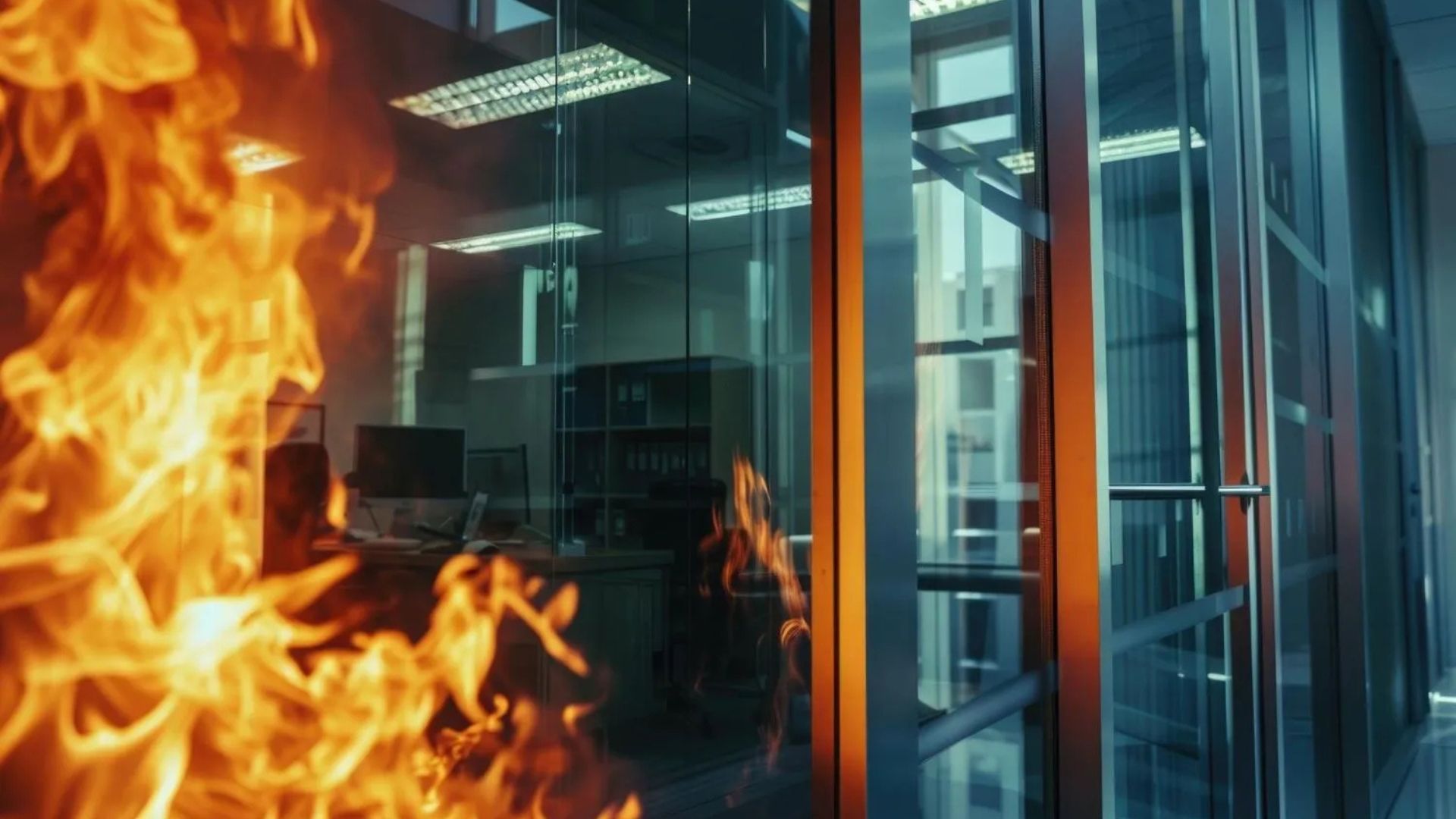
Fire-rated glass is a specialised type of glazing designed to withstand high temperatures and contain flames and smoke.


The higher the fire rating, the longer the glass can withstand fire. This gives building occupants more time to evacuate the building and the emergency services longer to arrive.


Like all kinds of specialised glass, it works just as well as a standard piece of glass. It allows for visibility and the entrance of natural light while protecting escape routes and limiting the spread of fire.


Fire-rated glass is used in a wide range of contexts, both commercial and residential. It's commonly found in fire doors, escape corridors, stairwells and external facades. It's especially in demand in high-occupancy areas, such as high-rise dwellings, schools and hospitals.


For a glazing system to be fire-rated, the frame must be fire-rated as well as the glass. This applies whether the frame is made from aluminium or steel.


But what do we mean by fire-rated, exactly?


What are the different types of fire-rated glazing?

Fire-rated glass is rated in two ways: integrity and insulation.


Integrity covers the glass's ability to block flames and smoke. It's identified in glass product descriptions with the letter E.


Insulation, by contrast, blocks flames, smoke and heat radiation. This is identified as "EI".


Both E-rated and EI-rated glass comes with a number. This represents the amount of time the glass can withstand flames, smoke and – in the case of EI-rated glass – heat radiation. Here are two examples:

  • E30: the glass offers protection against flames and smoke for 30 minutes.
  • EI120: the glass offers protection against flames, smoke and heat radiation for 120 minutes.

The highest available fire rating is EI180, which provides protection against flames, smoke and heat radiation for 180 minutes (three hours).


What are the different types of fire-rated glazing?

There are several types of fire-rated glazing on the market. Here at Wrightstyle, our fire-rated glazing systems are fitted with laminated fire-rated glass.


This is similar to any other laminated glass unit in that it consists of two or more glass sheets bonded with an interlayer. In the case of fire-rated laminated glass, the interlayer turns opaque and swells when exposed to high temperatures.


Fire-rated laminated glass offers high insulation, absorbing energy and limiting the transfer of heat. It also has the advantages of non-fire-rated laminated glass – in particular, its superior strength, safe breakage pattern, noise reduction and thermal efficiency.


Other kinds of fire-rated glass include ceramic glass, wired glass and borosilicate glass.


Both ceramic and borosilicate glass are still used in high-risk installations. Wired glass, however, has declined because of its poor impact safety. It's now prohibited in high-risk locations by modern building codes.


How is fire-rated glazing tested?

Fire-rated glazing is tested by subjecting both glass and frames to intense furnace heat. This measures the unit's ability to maintain structural integrity and, if required, to limit heat transfer.


Depending on the fire-rated glazing being tested, the test verifies integrity (E) against flames and smoke and insulation (I) against heat transfer. Ratings run from 20 minutes to 180 minutes.


Here at Wrightstyle, we subject our steel-and-glass assemblies to intense furnace conditions. We simulate real-fire conditions to ensure our fire-rated systems meet UK, European and US standards.


What is a fire-rated glazing system?

Fire-rated glazing refers to a kind of specialised glass. A fire-rated glazing system, however, refers to the glass and the frame.


To qualify as fire-rated, the whole glazing system must be fire-rated – not just the glass. This entails the use of specialised frames and seals.

What standards cover fire-rated glazing?

Picture of a construction worker writing.


Like all glazing and glazing systems, fire-rated glazing is governed by standards. In the UK and Europe, it's primarily governed by BS EN 13501-2. This classifies fire-rated glass products by integrity and insulation according to specific time intervals.


Other standards include BS EN 1634 for doors and BS EN 1363-5 for testing. In the UK, compliance is also mandated by Building Regulations Approved Document B. This ensures protection against smoke and flames.


How is fire-rated laminated glass made?

Fire-rated laminated glass is made by sandwiching a special intumescent (expanding) interlayer between two or more panes of toughened glass.


Toughened glass is a type of safety glass made by heating a standard sheet of glass at 650°C (1,200°F). Once out of the furnace, it's rapidly cooled with blasts of air.


This creates internal stresses within the glass. As a result, when toughened glass breaks, it shatters into many small fragments rather than large, jagged shards.


To make fire-rated glass, the sheets of toughened glass are cut to size and cleaned. The interlayer is placed between the glass panes.


This glass sandwich is then passed through a vacuum system and heated in an autoclave – essentially a heavy-duty pressure cooker. This bonds the glass and interlayer together and removes air bubbles.


The bonded glass is then removed from the autoclave and cooled slowly. Finally, it's trimmed and quality-tested for fire resistance and optical clarity.


What fire-rated glazing systems do we offer?

Here at Wrightstyle, we provide a wide range of clients with fire-rated glazing systems. These include curtain walls, windows, doors and partition screens. All are built for high levels of overall performance as well as high levels of fire protection.


Our SR series of curtain wall glazing systems includes a fire-rated curtain wall. This high-performance steel-and-glass system offers up to 120 minutes of integrity and insulation fire protection.


Then there's our 60F1 series. This is a series of fire-rated steel and glass windows, doors and partitions. This product range can be certified from 30 to 180 minutes – the highest available.


If you're looking for a fully tested and compliant fire-rated glazing system, we'd be delighted to discuss your project with you. Please don't hesitate to get in touch with our experts for comprehensive, step-by-step technical advice.

Share this article

Recent Posts

Glazing systems are typically powder-coated for durability and aesthetic appeal. Explore the key
by Simon Edward 27 June 2026
Glazing systems are typically powder-coated for durability and aesthetic appeal. Explore the key benefits and considerations of powder coating.
How does a curtain wall hang from the exterior of a building? Find out
by Simon Edward 22 June 2026
How does a curtain wall hang from the exterior of a building? Find out in our jargon-free architectural guide.
Thermal bridging in curtain walling can lead to heat loss. Discover the key measures
by Simon Edward 19 June 2026
Thermal bridging in curtain walling can lead to heat loss. Discover the key measures we take to avoid it.
Weather resistance is an important part of any glazing system. Learn how manufacturers design
by Simon Edward 15 June 2026
Weather resistance is an important part of any glazing system. Learn how manufacturers design for wind, rain, snow and worse.
Does your building project involve a roofed glazing system? Explore essential specifications
by Simon Edward 12 June 2026
Does your building project involve a roofed glazing system? Explore essential specifications and considerations.
Curtain wall systems differ in functions, materials and assembly methods. Explore the applications
by Simon Edward 8 June 2026
Curtain wall systems differ in functions, materials and assembly methods. Explore the applications and differences of various curtain wall types.
Curtain walls and facades are similar but distinct architectural features. Explore
by Simon Edward 5 June 2026
Curtain walls and facades are similar but distinct architectural features. Explore the key differences in our glazing system guide.
Glazing jargon can be complicated. Learn the most important differences between a curtain wall,
by Simon Edward 29 May 2026
Glazing jargon can be complicated. Learn the most important differences between a curtain wall, a storefront and a window wall.
Is steel or aluminium best for a glazing system? Explore the pros, cons and differences in our guide
by Simon Edward 25 May 2026
Is steel or aluminium best for a glazing system? Explore the pros, cons and differences in our guide.
Blast-resistant glazing systems need to be performance-tested. Find out what this involves
by Simon Edward 22 May 2026
Blast-resistant glazing systems need to be performance-tested. Find out what this involves in our glazing system guide.
Show More