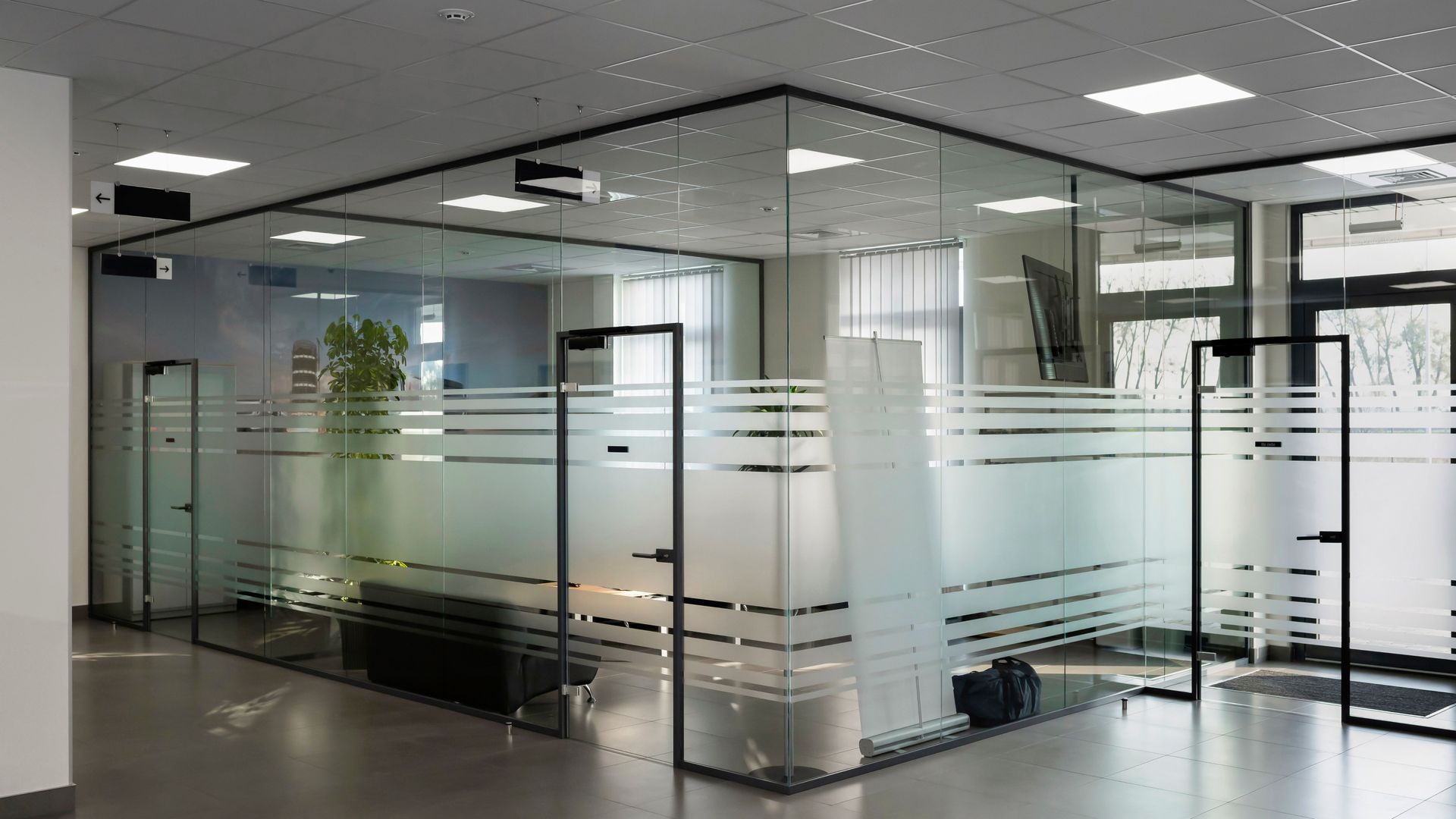
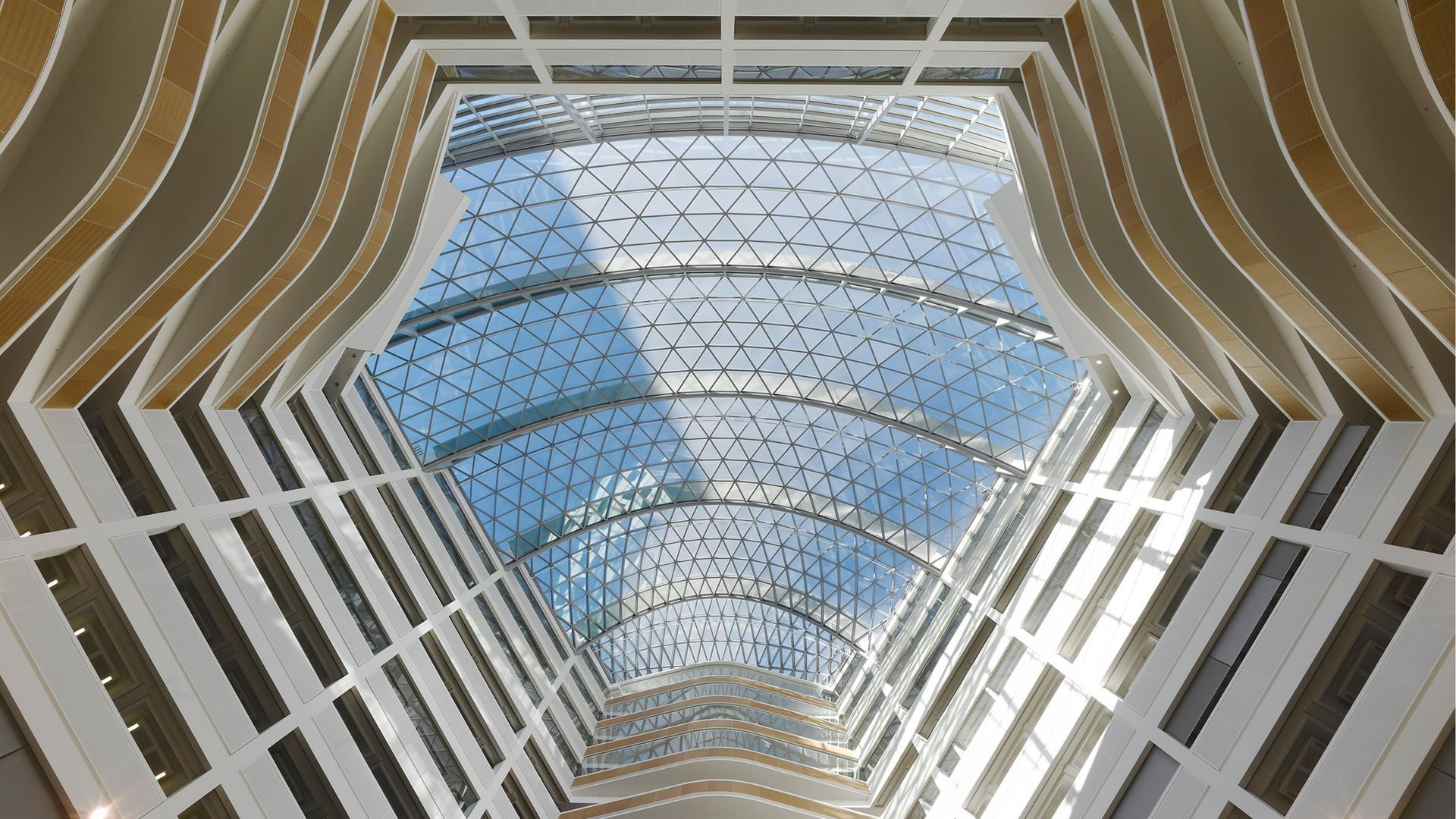
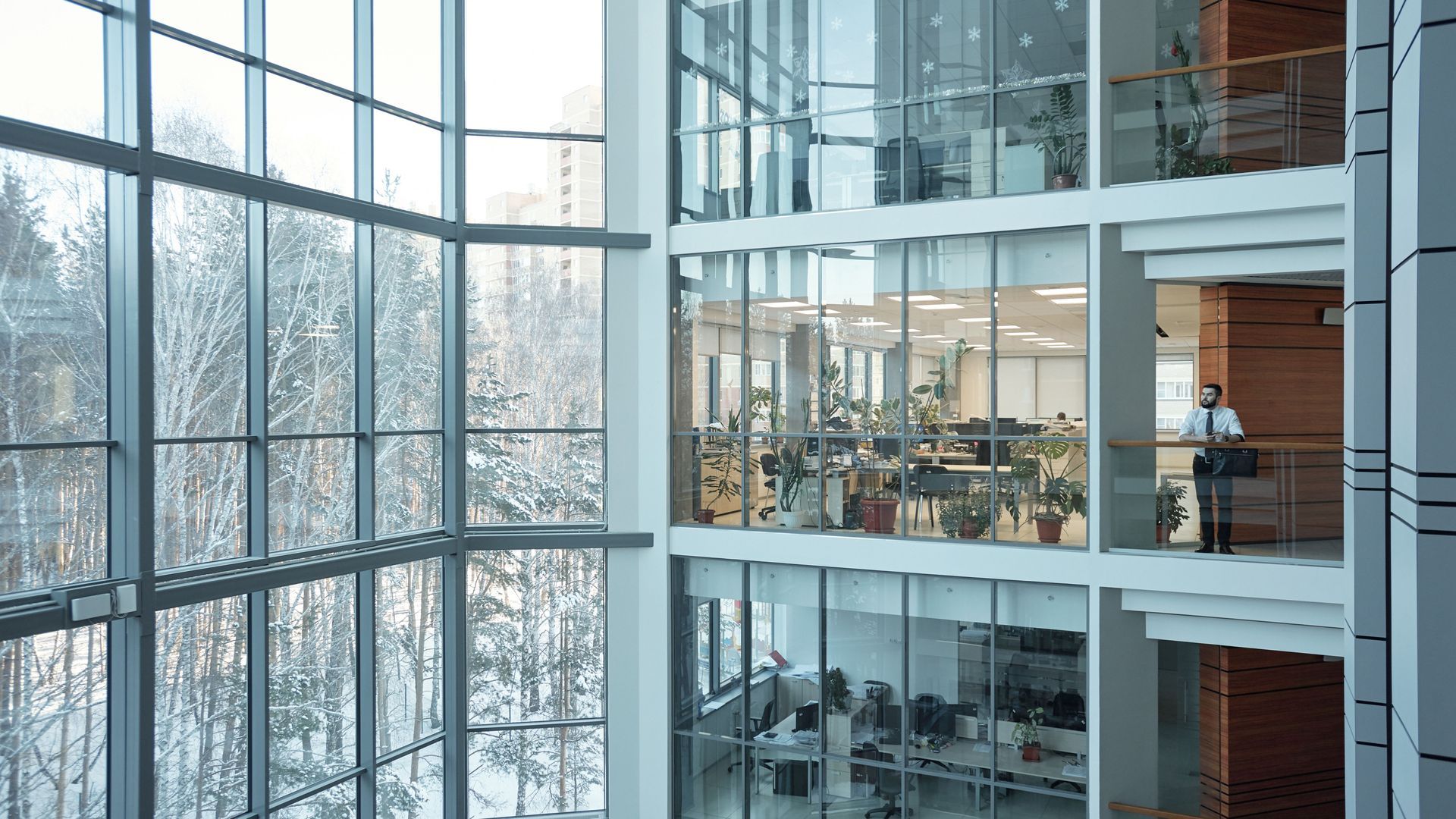
Curtain walls are a familiar sight in the UK and beyond. They act as a building skin or envelope, hanging suspended from the building's exterior.
Often made from aluminium and glass (but in our case from steel and glass), curtain walls get their name from the way they hang like curtains.
Unlike a curtain, of course, curtain walls are large and could do some damage if they fell. Looking up at a skyscraper or other high-rise building, you might wonder how exactly the facade is hanging safely from the building's main structural frame.
In this article, we look at the core components of curtain walls that enable them to be supported. But first, what is a curtain wall exactly?
What is a curtain wall?
Curtain walls are lightweight coverings for the exterior of buildings. They're often used in high-rise skyscrapers, modern commercial offices, retail spaces and hotels, as well as institutions like hospitals and universities.
A curtain wall is non-load-bearing. This means it doesn't carry floor or roof loads. Instead, it supports its own weight.
They're an exceptionally popular architectural component in financial districts and other high-end areas. This is because they allow for enhanced energy efficiency while providing a sleek, seamless, modern appearance.
How are curtain walls supported?
Curtain walls "hang" on the exterior of a building, transferring their own dead weight and wind loads to the structure via anchors.
These anchors, typically made from aluminium mullions and steel brackets, are fitted directly to the building's main structural frame at every floor level.
They're fitted in such a way that they move slightly. This allows for deflection (the bending or displacement of the curtain wall) without cracking or glass or sealant failure.
What is an anchoring system?
In the context of curtain walls, an anchoring system is a specialised assembly of steel or aluminium brackets and fasteners. These are used to attach the curtain wall to the building's structural frame.
There are two main types of anchoring systems for curtain walls: dead load anchors and wind/live load anchors.
- Dead load anchors support the vertical weight of the curtain wall and are often fixed to the building's slabs.
- Wind/live load anchors, by contrast, are slotted connectors that resist pressure but allow the curtain wall to sway to prevent cracking.
Anchors are typically made from stainless steel or standard steel. This material provides the strength, thermal conductivity and corrosion resistance required for the kinds of buildings that typically have curtain walls.
What are mullions and transoms?
In the world of glazing and glass fabrication, you're likely to come across the words "mullion" and "transom".
In general glazing terms, these are structural dividers that split windows or doors into smaller sections. Mullions are vertical and transoms are horizontal. They provide structural support for large and heavy glass panes. They're often used for aesthetic purposes, too.
In curtain wall glazing systems, mullions and transoms are the vertical and horizontal structural members that form the system's grid framework.
Mullions are vertical. They bear load and span the height of the floor. They're often connected to each other with spigots to allow for heat expansion.
Transoms, meanwhile, are horizontal members. They connect to the vertical mullions, creating a grid that can support glass or infill panels.
What are the other key components of glass curtain wall systems?
The other key components of glass curtain wall systems are:
- Glass and infill panels
- Gaskets and sealants
- Thermal breaks
- Pressure plates and caps
Most facades are created with vision glass (a type of transparent glass) or opaque spandrel panels. These can be single- or double-glazed or laminated. Laminated glass provides the highest levels of sound reduction, energy efficiency and impact resistance.
Gaskets and sealants are the components responsible for preventing leaks and managing water drainage. A watertight seal is often created with rubber gaskets and structural sealants.
These days, more and more architects and project managers prioritise energy efficiency. Here, thermal breaks play their role. These are insulating materials inserted into the frame to reduce heat transfer.
Finally, glass panels are held against the frame with exterior pressure plates and caps.
What are the types of curtain wall glazing?
There are three main types of curtain wall glazing systems.
The first is a stick system. This is supplied in pieces and assembled on-site. It contains vertical mullions anchored to slabs and horizontal transoms that span these slabs.
The second is a unitised or prefabricated system. These are assembled in a factory and then hung as complete units on the structural frame during construction. Semi-unitised systems are also available.
Finally, there are point-supported systems. This is where glass panels are directly bolted onto the corners or edges of a structure instead of being held by a frame.
What's the best material for a glass curtain wall?
Many curtain walls are made from aluminium framing and high-performance glass.
In our view, such systems do the job – but they don't do the job as well as steel. This is because of the five main
benefits of steel as a curtain wall material:
- Its inherent strength is greater than that of aluminium.
- It allows for high tolerances at the manufacturing stage.
- It's energy-efficient and weather-resistant.
- It allows for large free spans.
- When used for a specialised, fire-rated system, it offers up to 120 minutes of fire resistance.
In terms of glass, some curtain walls use IGUs and others use laminated glass units. These laminated units can be manufactured for specialist use. For instance, you can get a curtain wall glazing system fitted with bullet-resistant glass, bomb-resistant glass or fire-rated glass.
Wrightstyle is a UK-based supplier of
speciality glazing systems, including high-performance steel curtain wall systems. For more industry advice and insights, visit our
free resource centre.