Fire doors with glass panels: regulations, ratings and options
What do you need to know before specifying fire-rated doors with glass panels? Learn about key regulations, fire ratings and what your options are.

The construction industry has never been more regulated. This simple statement can be seen clearly in the unparalleled levels of fire safety regulations that architects, designers and specifiers must now meet to ensure compliance.
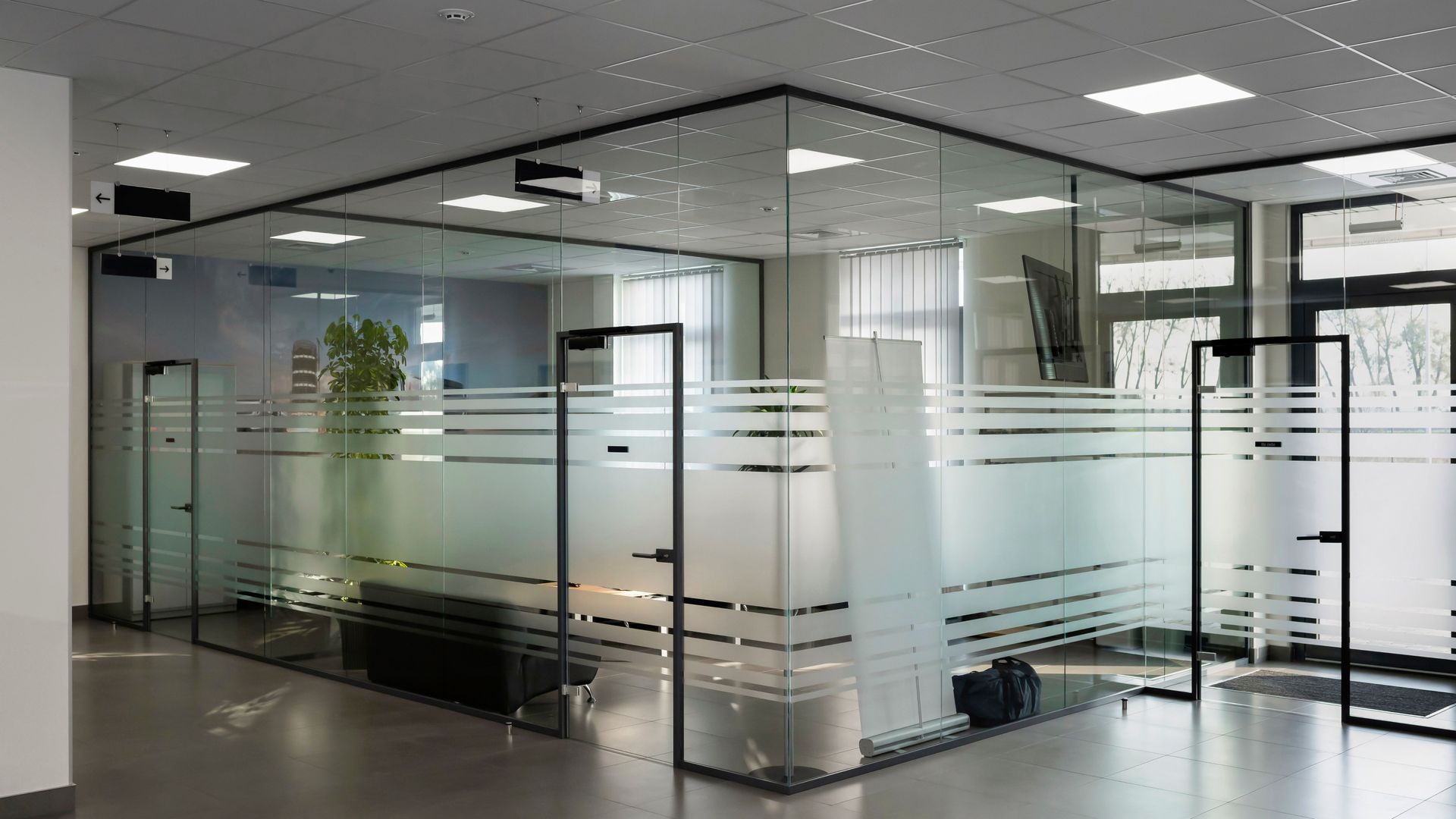
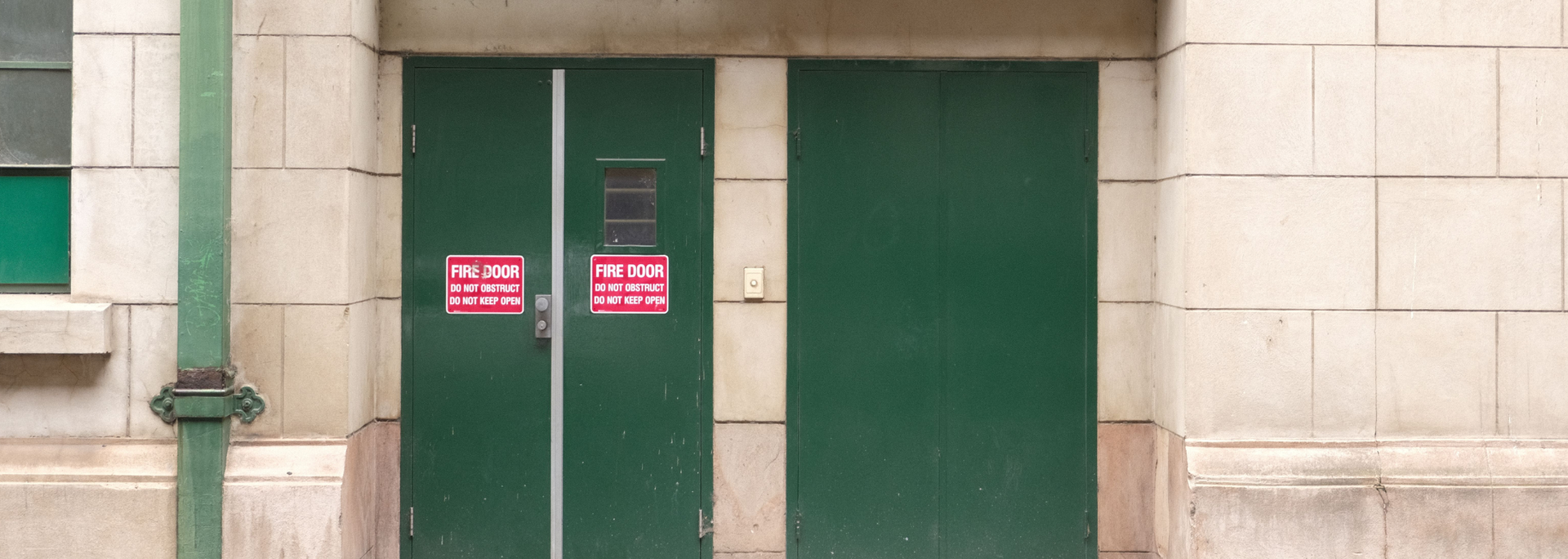
Fire safety in architectural design consists of many things. One of these is the use of fire doors with glass panels, also known as "glazed fire doors". These are fire-resistant doors that include specially designed fire-rated glass.
It's important to note straight away that both the door and the glazing system must be fire-rated and certified together. Without these certifications, it's just a door with a glass panel and won't meet fire safety regulations.
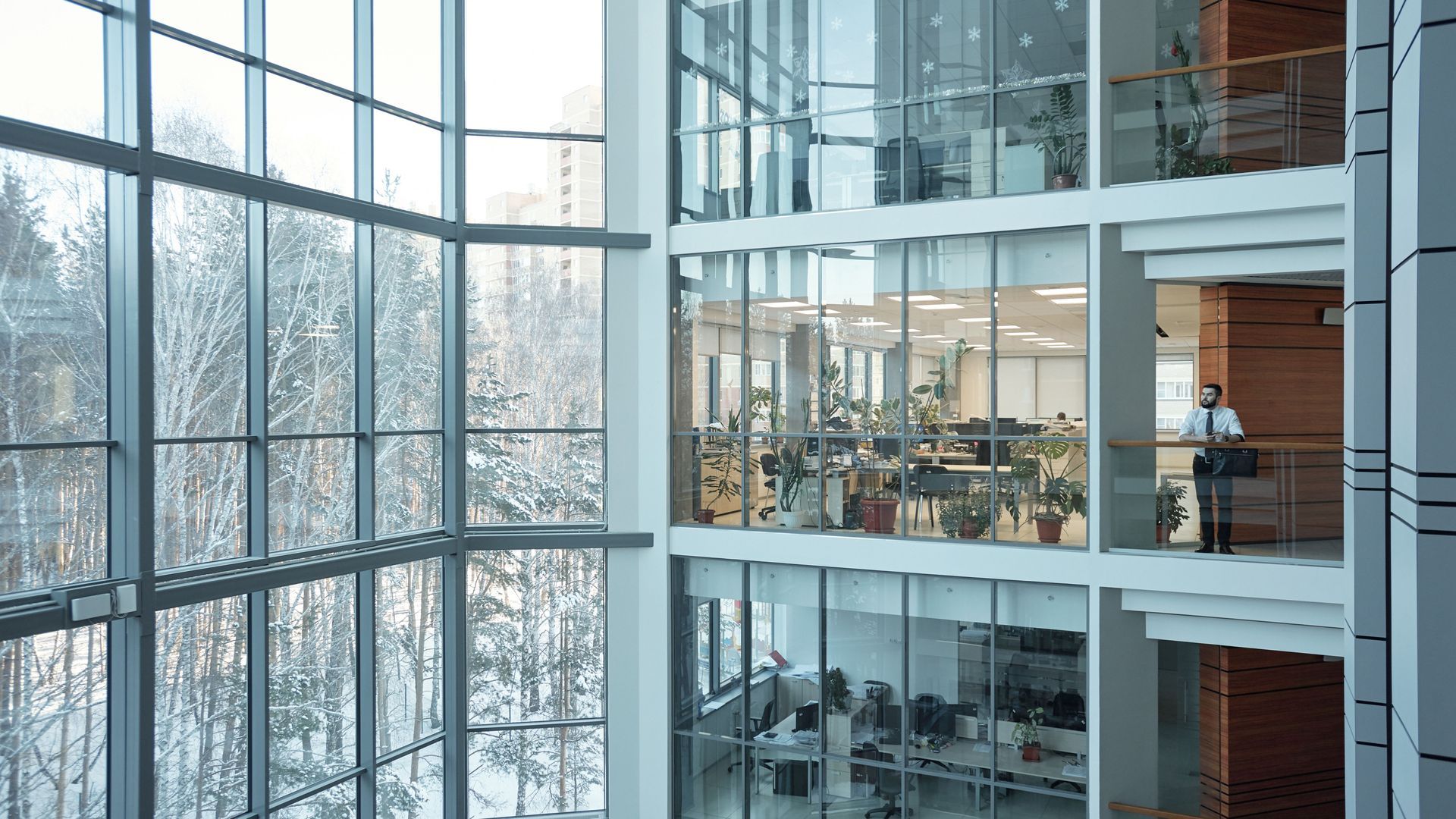
Fire doors with glass panels do double duty. They slow the spread of fire and smoke while allowing visibility and natural light between areas of a building.
How does a fire door work?
Fire doors with glass panels combine a fire-resistant door leaf with fire-rated glass and special seals. Together, they create a barrier that slows the spread of fire, smoke and heat.
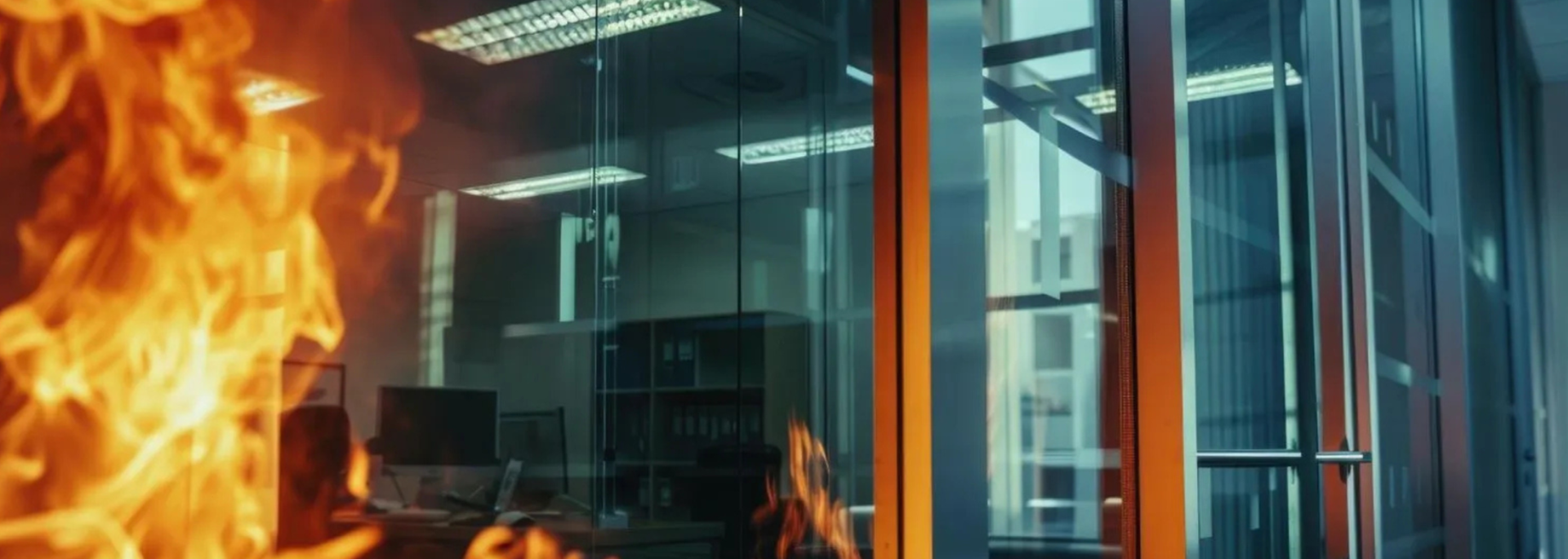
When a fire breaks out, the door stays closed, and the seals (intumescent strips around the edges) activate and swell. The fire-rated glass resists the fire, and the door assembly maintains structural integrity.
The glass is specially manufactured to not shatter in high heat. The most common types of glass used for this purpose are:
- Toughened fire-resistant glass
- Laminated glass with fire-resistant interlayers
- Laminated glass with gel-filled layers
As well as providing fire protection, fire doors allow natural light into corridors and rooms. This makes the building more welcoming, usable and liveable-in from day to day. Furthermore, in the event of a fire, the fire is compartmentalised, and people can see whether an area is safe before entering.
What are fire doors made of?
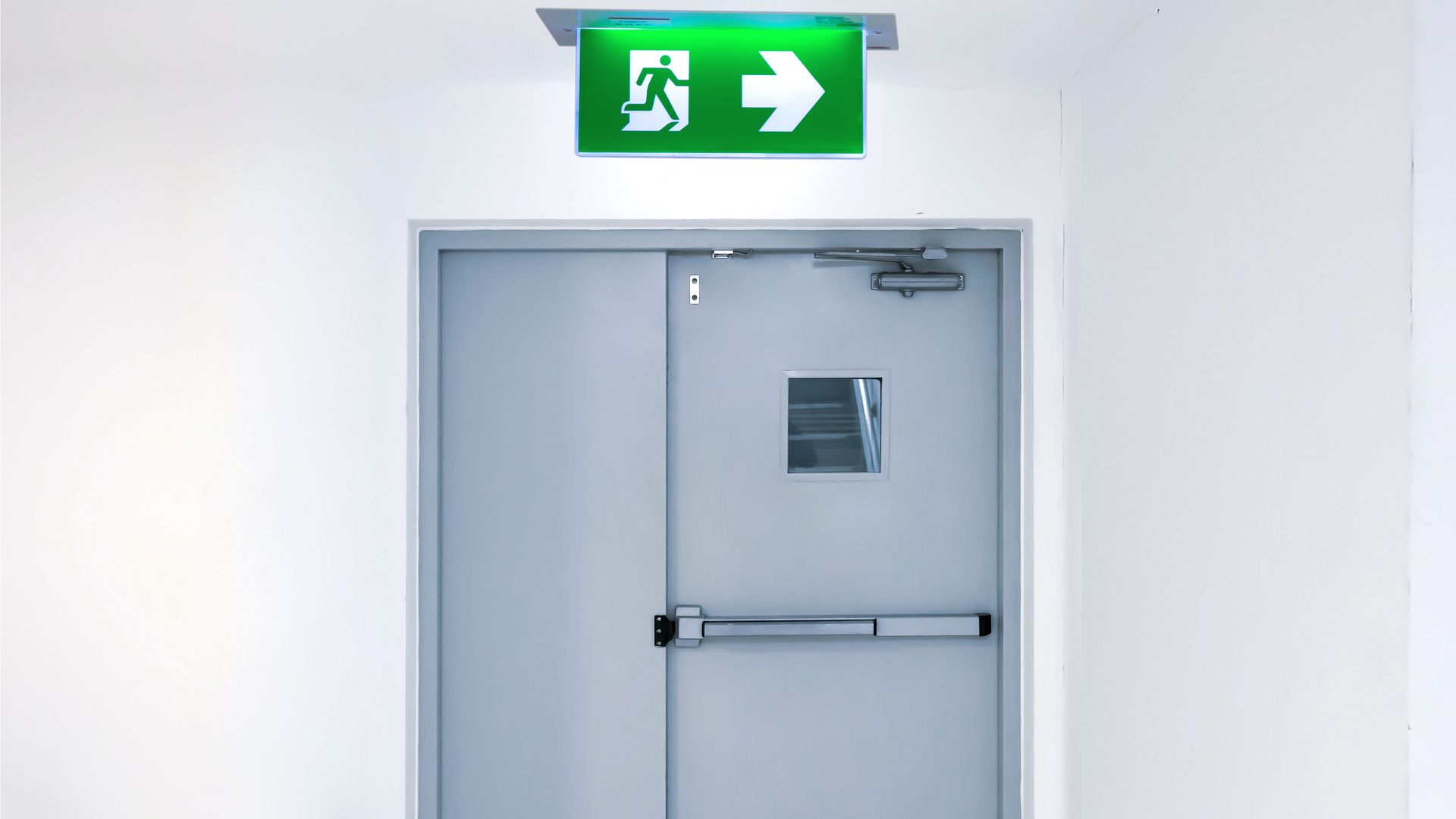
Fire doors are typically made from a solid, fire-resistant core surrounded by timber, steel or another protective material. This construction makes them far more substantial than an ordinary internal door.
The fire protection comes from the whole door assembly, not just the glass or the door core. This includes:
- The core
- The frame
- Intumescent strips
- Smoke seals
- Fire-rated hinges
- Fire-rated locks
- Fire-rated closers
- Where used, fire-rated glass
Where are fire doors with glass panels used?
Fire doors with glass panels are used wherever extra fire safety is required. Common applications include schools, hospitals, offices, residential buildings, hotels and public spaces.
They're often installed in corridors, stairwells and escape routes. The glass panels help people find their way out during a fire.
What regulations cover fire doors with glass panels in the UK?
In the UK, fire doors with glass panels are covered by the same fire safety regulations as any other fire door. However, the glazing itself must be fire-rated and tested as part of the complete door assembly.
The main guidance is provided in Approved Document B (Fire Safety) of the government's building regulations. This document specifies where fire doors are required and the performance levels they must meet.
The fire rating applies to the whole doorset, including leaf, frame, hardware, seals and glass. Even small changes to any of these components can affect the overall fire rating.
Fire doors with glass panels are generally tested to;
- BS EN 1634-1: the European fire-resistant test for doorsets
- BS 476-22: the UK fire-resistance test
The glass used for the panel must be specialised fire-resistant glass rather than ordinary toughened glass. It must also be tested as part of the doorset.
Fire-resistant glass is usually classified as E or EI. "E" refers to integrity-only glass, which stops the spread of flames and heat. EI glass, however, provides integrity and insulation, stopping the spread of flames and heat and also limiting heat transfer.
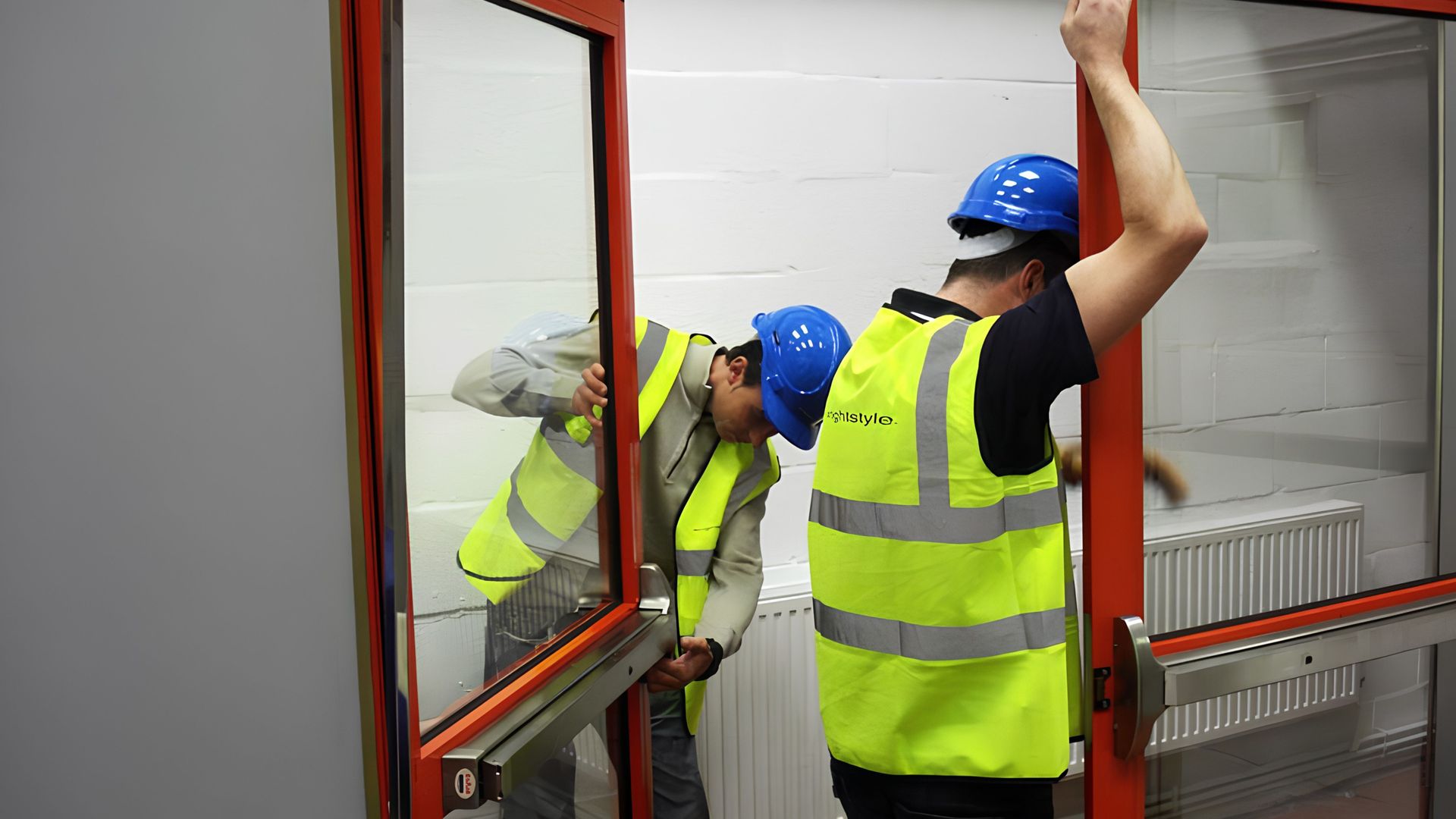
Installation matters, too. UK guidance states that the glass panels in fire doors mustn't diminish the fire performance of the door. This means the installation of the glazing system is essential for fire safety and must be undertaken by a professional using tested components.
Once installed, the fire door must be continually maintained to ensure compliance with current guidance, such as BS 8214:2026. This covers specification, installation, inspection and maintenance.
How are fire doors with glass panels rated in the UK?

Fire doorsets are rated using FD ratings. "FD30" means the doorset will provide a minimum of 30 minutes' fire and smoke resistance, while FD60 doors provide an hour's resistance, and so on.
The glass panels, meanwhile, are rated according to the E and EI system.
E (integrity) measures the fire door's ability to prevent flames and smoke from passing through, while EI (integrity and insulation) also restricts heat transfer.
Both E and EI ratings are followed by a number representing how long (in minutes) the door can resist fire. For instance, E30 provides 30 minutes of integrity-only protection while EI130 provides 130 minutes of integrity and insulation protection.
What options are available?
If you're specifying fire doors for a building project, you have a range of options. The right specification for you will depend on a range of factors.
These include:
- What the building is used for
- How the rooms and corridors are compartmentalised
- Who uses the building
- Security needs
- Acoustic requirements
- Regulatory guidance
In terms of the door leaf, you can choose between timber fire doors, steel fire doors, composite fire doors and aluminium glazed fire screens and doors.
For glazing, meanwhile, you can choose between vision panels, large glazed panels and fully glazed fire doors.
Wrightstyle is a UK-based provider of speciality glazing systems, including fire-rated steel doors with glass. If you want to know more about our products and their capabilities, don't hesitate to get in touch with our experts for bespoke technical advice.