

The architects' guide to specifying curtain wall systems

Simon Edward • 11 May 2026

Are you tasked with specifying a curtain wall for a building project? Learn the key specs and how to avoid complications.


Are you tasked with specifying a curtain wall for a building project? Learn the key specs and how to avoid complications.

When specifying for a building project, no corners can be cut and no one component is more important than another.


Nevertheless, the process of specifying curtain wall systems presents unique challenges. This is largely because the curtain wall acts as the "skin" of a building.


This means the curtain wall must provide thermal performance and protection against water penetration and high wind loads.


Glazed curtain wall systems tend to be used in modern, high-rise or multi-level projects. They answer the need for a lightweight and non-structural facade that maximises the amount of natural light entering a building. They also tend to be used in projects where a sleek seamless aesthetic is called for.


So, what do architects need to keep in mind when specifying a glazed curtain wall system? A comprehensive list would have to include performance, aesthetics, system type and materials.


More specifically, these specifications include structural loads, thermal efficiency, water penetration and aesthetic considerations (such as the inclusion of mullions and glazing tints). Specifiers also need to choose between stick-built (disassembled) or unitised (pre-assembled) systems.


All these factors will depend on building regulations, client requirements and budgetary considerations.


What are the key specifications for curtain wall glazing systems?

There are eight key specifications for curtain wall glazing systems. These are:


  1. Performance requirements
  2. System type
  3. Resistance
  4. Materials
  5. Energy performance
  6. Water management
  7. Compliance
  8. Testing

Performance

Performance requirements are all about the capacity of the system to withstand wind loads, building movements, water leakage and air infiltration. These will contribute to the longevity as well as the performance of the glazing system.


System type

Glazing systems come in two main types: unitised and stick-built. Unitised systems are pre-assembled and often used in fast-track projects. Stick-built systems, by contrast, come in parts that need to be assembled on-site. The choice between unitised and stick-built systems will depend on the nature of the project.


Most glazing system vendors will provide a choice of glazing, frame finishes and frame types. These will all need to be considered when specifying a curtain wall system, regardless of the setting.

Resistance


Curtain wall glazing systems can be specially manufactured for resistance against bullets, bombs and fire. These requirements should be shared with the manufacturer or supplier who can furnish you with tech specs relating to these specialised functionalities.


Materials

Glazed curtain wall systems need to be sturdy and relatively lightweight. Typically, safety glass is used for the main infills (toughened, laminated or both). The mullions and transoms, meanwhile, are often made of aluminium.


At Wrightstyle, however, we exclusively use steel and glass for our glazing systems. As well as being more durable than aluminium, steel allows for narrower profiles, longer free spans and better performance in specialised applications.


Energy performance

Next up is the energy performance of the glazing system. This will be determined by thermal performance and solar control requirements, for instance those specified by BS 8233.

Water management

Glazing systems must be fitted with drainage systems to deal with water infiltration. Make sure this is taken into consideration when working with a manufacturer or supplier.


Compliance and testing

The final two considerations are related but distinct.


When specifying a curtain wall system, compliance is essential. Your curtain wall system must be compliant with local and national building regulations and standards. This is to protect your reputation as an architect as well as the safety of the people who use the finished building.


The curtain wall system should also be tested for air and water tightness. If you specify blast-resistant, bullet-resistant or fire-resistant glass and glazing systems, these systems need to be specially and comprehensively tested.


Here at Wrightstyle, we carry out these systems in the real world, not via simulations. These real-world tests provide definitive data that a simulation wouldn't capture.


When are curtain walls specified in building projects?

Curtain wall glazing systems are most often specified in high-rise and multi-level building projects. This is because they hang on the outside of the building frame, transferring only their own weight and wind loads to the structure. This helps architects achieve the crucial goal of reducing dead load on the main frame.


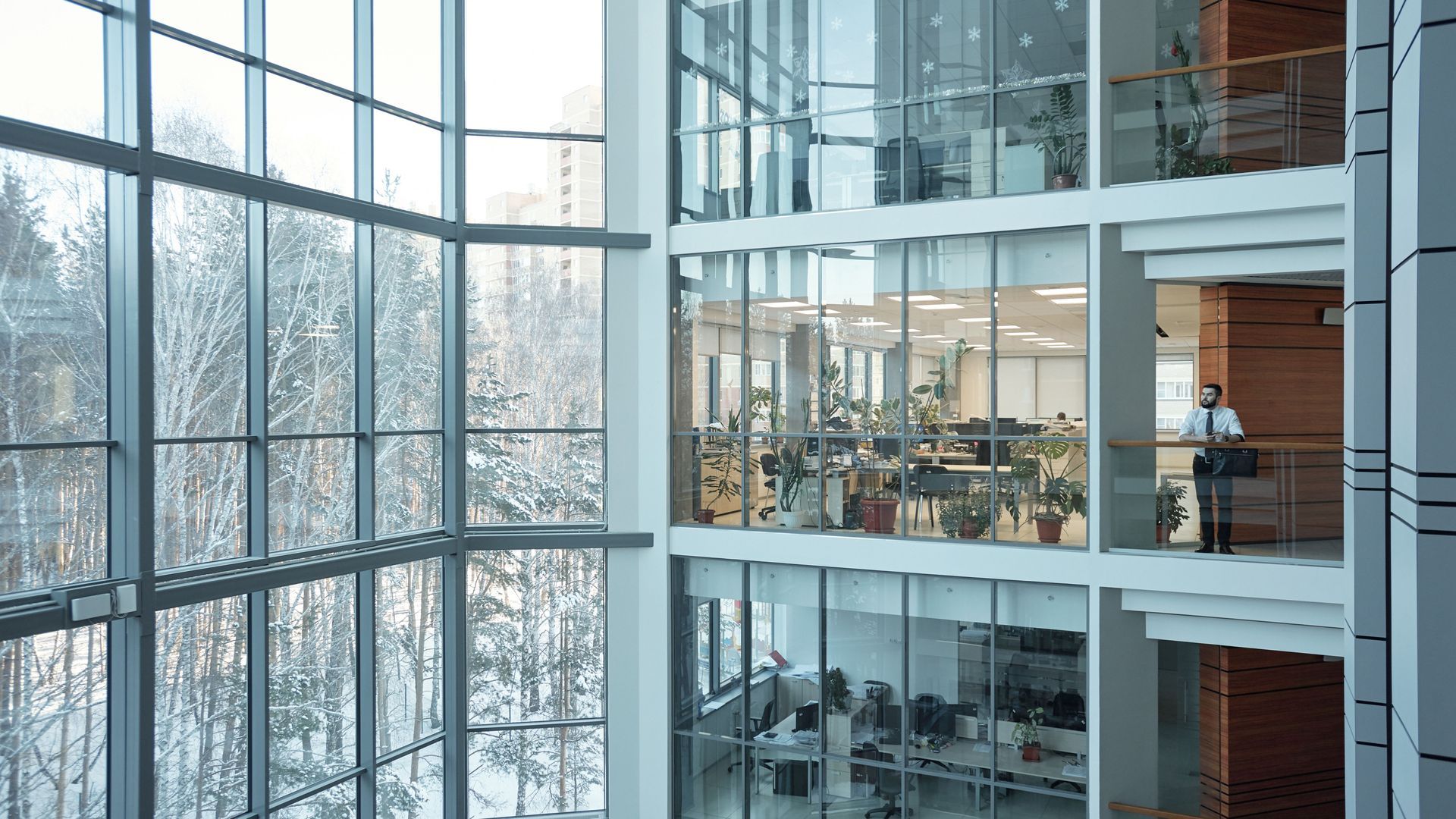
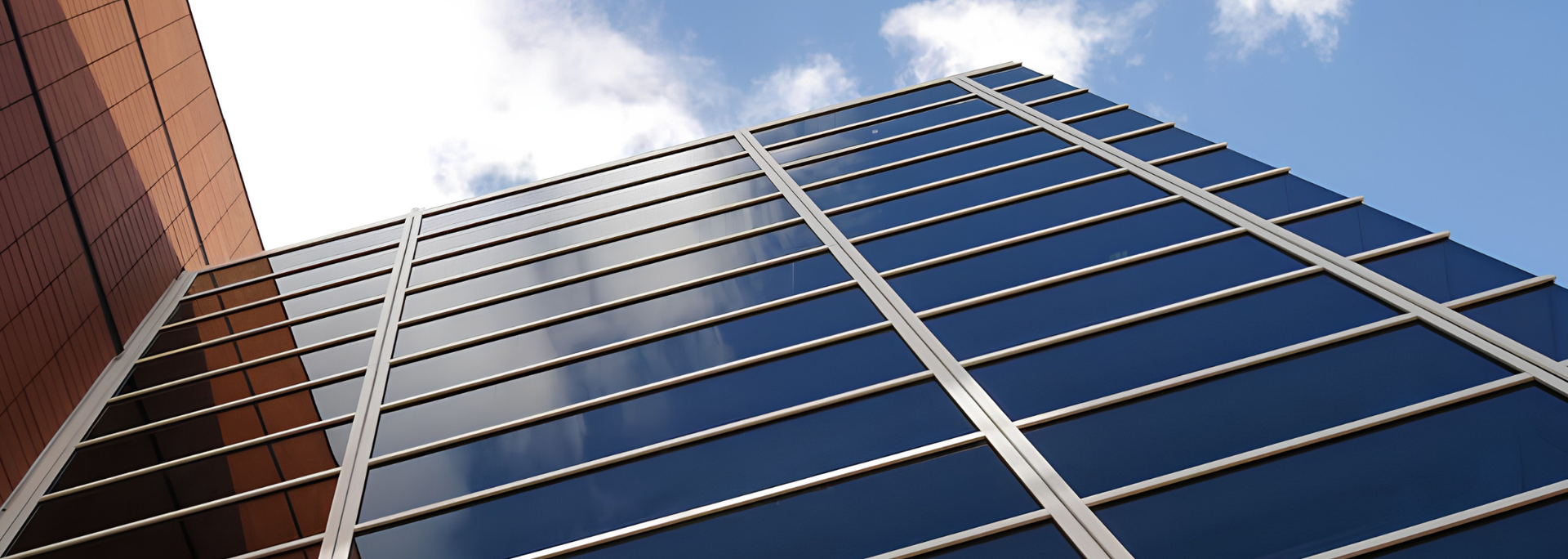
Picture of a curtain wall.

They're also often used when the architect wishes to maximise natural light and transparency. This could be in pursuit of airy interiors, a sleek and seamless look – familiar to visitors to the world's financial districts – or both.


That sleek modern look is instantly recognisable but diverse. Options available to architects include integrated panels, vertical or sloped glazing and a wide range of colour choices.


Finally, curtain walls are often specified for fast-track projects, especially in high-density urban areas. Unitised systems make installation quick and easy on-site.


Curtain wall systems with specialist glass

In some settings, architects want the glass in curtain wall glazing systems to be made specially resistant, whether to bullets, bombs or fire.


This is partly a case of specifying specialist glass. However, it's not enough for the glass alone to be fire-rated, blast-resistant or bullet-resistant.


Instead, the whole unit has to be built for purpose. This is why it's essential to communicate your project requirements to a supplier at the beginning of the process, enabling them to point you to the product you need.

What are the architectural benefits of curtain wall systems?

There are many benefits specific to the scope and design of our curtain wall systems. You can find these technical specifications on our website. However, there are broader benefits of curtain walls for architects which contribute to their ubiquity in modern design.

The first is their structural independence. The cladding hangs from the outside of the structure. This allows for continuous, unbroken expanses of glass – a look that's practically a modern classic.


Curtain walls are lightweight. This means they reduce the overall weight of the building's envelope. In the process, architects and project managers can accelerate the speed of construction and spend less on materials.


Finally, a high-quality curtain wall is extremely durable and acts as a strong and impermeable barrier against wind, rain and other weather conditions.


All of these benefits make curtain walls a popular choice in modern building projects.


Founded in 1996, Wrightstyle is a trusted UK curtain walling company and manufacturer of speciality glazing systems. Do you need assistance to navigate the complexities of architectural glazing? We offer step-by-step technical support to help you get it right first time. Don't hesitate to get in touch with our experts.

Share this article

Recent Posts

Bulletproof glass is manufactured differently from standard laminated glass. Learn how it's made
by Simon Edward 8 May 2026
Bulletproof glass is manufactured differently from standard laminated glass. Learn how it's made and how it's tested.
8 April 2026
Light and glass go hand in hand. Most building materials have weight and mass, whether concrete, a brick or a length of structural steel. There is, however, one building material that has neither weight nor mass.
8 April 2026
n a two-part article, Jane Embury, marketing director, looks at shopping centres fire safety.  We don’t often think about fire breaking out in our local shopping centre. However, let’s remember that in July a fire engulfed a shopping centre in Walthamstow, east London. And just last month, a serious fire broke out in a shopping centre in Douglas, County Cork. The fact is that retail fires account for about 10% of “large fire losses.” Of those, some 20% are in shopping centres. Many are started deliberately. In a shopping centre, responsibility for fire safety can be complex. The shopping centre management team will have responsibility for the communal areas.
8 April 2026
Many people think that bullet-proof glass is bullet proof, the answer is yes, but not necessarily. It depends on the protection level of the frame and the glass. As always, it comes down to a preliminary threat assessment, to determine the risk to both property and life. For example, the level of protection required for a government or military building will be higher than the local post office. When a bullet is fired at a sheet of bullet-resistant glass, it will penetrate the glass layers. But it’s the interlayer, or interlayers, of polycarbonate and polyurethane, or a mixture of both, sandwiched inside the glass that absorbs the projectile’s energy and prevents it going through.
8 April 2026
Wrightstyle supplied fire-rated systems to the iconic King’s Cross redevelopment in London, both to the station itself and surrounding projects. Wrightstyle’s managing director, Tim Kempster, remembers events of 30 years ago. The term “codifying by disaster” has a long and dishonourable history. It’s the term used to to describe how advances in safety regulations and fire-rated systems often only come about following appalling tragedy. In a year which has seen the Grenfell Tower disaster, and new regulations will inevitably be brought in, it’s worth remembering a London train station tragedy thirty years ago that claimed the lives of 31 people. However, what marks the King’s Cross fire as different in scope and scale is that, not only did it lead to better fire safety regulation, it helped us all better understand an unknown dynamic in how a small fire can become a conflagration. King’s Cross station, completed in 1852 on the site of a former smallpox hospital, is reputedly haunted by the ghost of Queen Boudicca and is the railway station from which, as every Harry Potter fan knows, you catch the train for Hogwarts. The station handles nearly 50 million station users each year and, inevitably, security is of paramount importance, not least because of the 2005 bombing outrage, which killed 52 people, with the four bombers traveling into King’s Cross before carrying out their murderous attacks. Although it remains the worst terrorist attack in London, it wasn’t the first at the station. In 1973, a Provisional IRA bomb also detonated in King’s Cross’s booking hall, injuring six people, several seriously.
8 April 2026
Wrightstyle’s Technical Director, Lee Coates, takes a deeper look at the Bradford City fire (at the football stadium) and the consequences.