

Shopping Centre Fires

8 April 2026

n a two-part article, Jane Embury, marketing director, looks at shopping centres fire safety.


We don’t often think about fire breaking out in our local shopping centre.


However, let’s remember that in July a fire engulfed a shopping centre in Walthamstow, east London.


And just last month, a serious fire broke out in a shopping centre in Douglas, County Cork.


The fact is that retail fires account for about 10% of “large fire losses.”


Of those, some 20% are in shopping centres. Many are started deliberately.


In a shopping centre, responsibility for fire safety can be complex.


The shopping centre management team will have responsibility for the communal areas.


FRA

But responsibility then passes to individual shops for their own premises.


The law requires that a competent person carries out a Fire Risk Assessment (FRA).


If you employ more than five people, that written FRA must be kept on file.


The FRA is all about identifying risk, and minimising or eliminating those risks.


But it’s also about ensuring the safety of firefighters if there is a fire, and looking at the continuity of the business.


In the UK, there are 42 shopping centres over 70,000 sq metres in size.


The biggest is Westfield in west London at 235,900 sq metres.

Royal Exchange

It’s taken the biggest crown from the Metrocentre in Gateshead, at 192,900 square metres.


(The UK’s first shopping centre was opened in 1660, and surrounded the Royal Exchange. It had 100 kiosks and shops).


Current safety requirements require collaboration between the designers, developers, fire system installers and the centre’s management team based on Building Control Regulations. It’s the reason why UK shopping centres are so safe.


But compare that with a shopping centre fire in Asunción, Paraguay in 2004. In total, 364 people lost their lives.


Underlining how responsibility for fire safety lies not just in the hands of the shopping centre management team, the fire started in an improperly-maintained grill located in the centre’s food court.


Of course, worldwide, the threat from fire is being slowly reduced with stricter building regulations covering both passive and active fire safety measures.

Smoke and fire

That includes everything from better detection systems to catch the fire early to better sprinkler systems to put it out.


The Paraguay fire started with just an ember from a chimney, and that’s how most catastrophic fires begin – often just a dropped cigarette or a spark from faulty wiring.


Fire is spread through three methods: convection, conduction and radiation, of which convection is the most dangerous.


This is when smoke from the fire becomes trapped by the roof, spreading in all directions to form a deepening layer. Smoke, rather than fire, is often the real danger.


Materials such as metal can absorb heat and transmit it to other rooms or shops by conduction, where it can cause new fires to break out.


Radiation transfers heat in the air, until it too sets off secondary fires, spreading the danger away from its original location.


Radiation was the culprit in a 2012 shopping centre in Qatar. where an electrical fire started near a child care centre, going on to trap the children and their teachers.


In total, 13 children died, mostly from smoke inhalation. Four teachers and two firefighters also died.

Fire zones

The fact is that shopping centres can be extremely complex, with potentially large fuel loads and equally large numbers of people.


They can include not just shops. Many shopping centres also have hotels, food courts, cinemas, restaurants, bars and offices.


That’s why compartmentation is so important. It divides the building into discrete fire zones, with retardant materials to limit the spread of fire.


That’s where our internal and external advanced steel systems come in.


They’ve been tested together to US, Asian and European standards. And to furnace temperatures of well over 1000˚c.


That both tests the strength of the glass and its framing system, because if one fails, the whole system fails.


This is the core function of an integrated glass and framing system.


By preventing oxygen from reaching the seat of the fire, it provides an effective barrier against the passage of fire, heat and toxic gas.


This allows people to escape and, by containing the fire, minimises fire damage.


The main lesson from Qatar and Paraguay is that fire can spread with devastating speed. That’s particularly so in a large open space such as a supermarket or shopping centre.


The key is containment, trapping the fire, and allowing people to escape.  It’s the reason why our systems can be found in shopping centres around the world.


In the second part of this article, Jane will look at some landmark shopping centre projects that we’ve supplied to.


Photo courtesy of Krisztina Papp on Unsplash

Share this article

Recent Posts

8 April 2026
Light and glass go hand in hand. Most building materials have weight and mass, whether concrete, a brick or a length of structural steel. There is, however, one building material that has neither weight nor mass.
8 April 2026
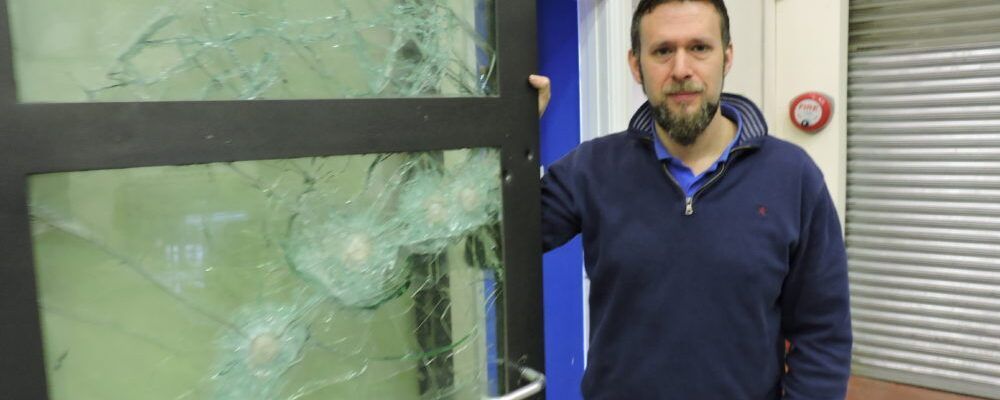
Many people think that bullet-proof glass is bullet proof, the answer is yes, but not necessarily. It depends on the protection level of the frame and the glass. As always, it comes down to a preliminary threat assessment, to determine the risk to both property and life. For example, the level of protection required for a government or military building will be higher than the local post office. When a bullet is fired at a sheet of bullet-resistant glass, it will penetrate the glass layers. But it’s the interlayer, or interlayers, of polycarbonate and polyurethane, or a mixture of both, sandwiched inside the glass that absorbs the projectile’s energy and prevents it going through.
8 April 2026
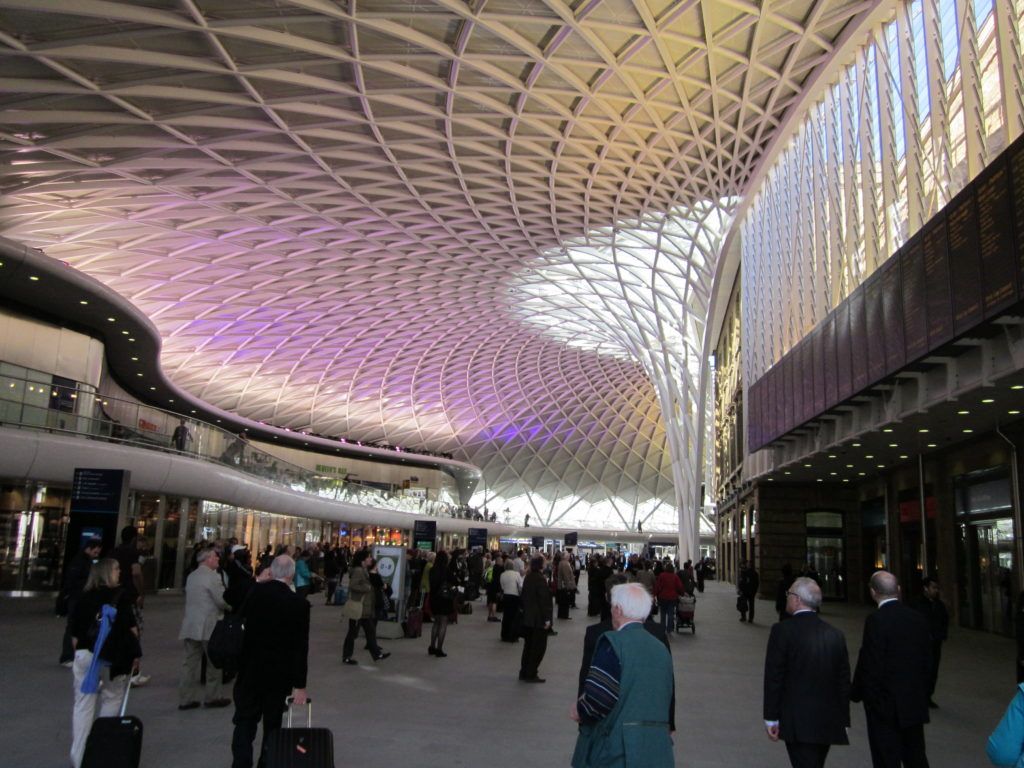
Wrightstyle supplied fire-rated systems to the iconic King’s Cross redevelopment in London, both to the station itself and surrounding projects. Wrightstyle’s managing director, Tim Kempster, remembers events of 30 years ago. The term “codifying by disaster” has a long and dishonourable history. It’s the term used to to describe how advances in safety regulations and fire-rated systems often only come about following appalling tragedy. In a year which has seen the Grenfell Tower disaster, and new regulations will inevitably be brought in, it’s worth remembering a London train station tragedy thirty years ago that claimed the lives of 31 people. However, what marks the King’s Cross fire as different in scope and scale is that, not only did it lead to better fire safety regulation, it helped us all better understand an unknown dynamic in how a small fire can become a conflagration. King’s Cross station, completed in 1852 on the site of a former smallpox hospital, is reputedly haunted by the ghost of Queen Boudicca and is the railway station from which, as every Harry Potter fan knows, you catch the train for Hogwarts. The station handles nearly 50 million station users each year and, inevitably, security is of paramount importance, not least because of the 2005 bombing outrage, which killed 52 people, with the four bombers traveling into King’s Cross before carrying out their murderous attacks. Although it remains the worst terrorist attack in London, it wasn’t the first at the station. In 1973, a Provisional IRA bomb also detonated in King’s Cross’s booking hall, injuring six people, several seriously.
8 April 2026
Wrightstyle’s Technical Director, Lee Coates, takes a deeper look at the Bradford City fire (at the football stadium) and the consequences.